Blockchain for sustainable development and environmental protection

With several environmental difficulties coming up across the world, businesses, societies and the world are highly looking for different ways to decrease the environmental effects and contribute to sustainable development. In this post, we will know how blockchain technology can contribute to sustainable development and environmental protection. Starting from enhancing supply chain transparency to allowing more sustainable business models, blockchain can provide several advantages to businesses that want to attain sustainability goals, primarily in a way of safety, sustainability and inclusions.

About Blockchain

A blockchain is a chain of ordered records known as blocks with each block having transaction data, a hexadecimal number and a timestamp that acts as a cryptographic hashtag. These blocks are interlinked chronologically and safely, forming a chain and thus the name “blockchain”.

The blockchain functions on a distributed network of devices known as nodes. Every node has a copy of the complete blockchain, thereby making sure that there is no one point of failure or control. Blockchain transactions are safe through cryptographic methods and are immutable.

About Sustainability

Sustainability primarily involves preserving ecological, social and economic systems in such a way that it makes sure there is viability and resilience in the long term. Sustainability can be environmental and focuses on responsible stewardship of natural resources, emphasizing access to resources, labor practice and justice.

Sustainable practices can increase the reputation and viability of a company. Some companies practice greenwashing, claiming eco friendly practices and do not genuinely integrate sustainable principles into operations. Actual sustainable development follows UN sustainable development goals that address problems like poverty, hunger and gender inequality.

For the achievement of these goals, government, and non-profit organizations including citizens should work to advocate change, support good labor, remain abiding by sensible emission standards and get engaged in practices of community development.

Blockchain sustainable practices

Life cycle assessment

This indulges everyone in the ecosystem to trace the pathway of all products and their effect on the environment right from cradle to grave and then again back to cradle in the circular model. Blockchain with its capability to capture and keep data offers a great solution for tracking and displaying such data so that no one can tamper with data for their purposes. Such joint group acts relying on technology and quality of blockchain, along with other supervising technologies like IoT and AI will move businesses on the path to environmental sustainability and a circular, regenerating economy.

Transparency of supply chain and safety

Blockchain allows businesses to keep track of the origin and product lifecycle, making sure there is great transparency, safety and dependability in supply chain operations. By doing so, customers get a good assurance of the ethical origins of the product, the process that takes place while managing those products and the security and origin of the products that they consume.

Sustainable models of businesses

Blockchain technology allows the development of sustainable business models through the incentivization of ESG-based behavior by using smart contracts and tokenization. Data about materials, energy inputs, sourcing data and sustainability initiatives are kinds of value that can be unlocked through blockchain. For instance, a customer who earns loyalty points by buying a beverage can be offered more tokens for adapting sustainable actions for the company.

Creation and trading of carbon credit

Blockchain technology can with a high degree of accuracy keep a record of data that allows the formation of carbon credits which are the certificates representing the reduction of one ton of carbon dioxide emissions. Because of data verifiability as well as immutability that causes the creation of blockchain-based carbon credits, the value of such credits is higher than those that are not created by making use of blockchain technology for recording environmental and societal advantages.

Green energy management

Blockchain technology allows management and supervision of renewable energy creation and its consumption. This blockchain green technology allows the incorporation of renewable sources of energy into the grid and decreases the dependency on fossil fuels. By changing from centralized to decentralized paradigms of energy distribution, renewables can be flawlessly incorporated into energy grids. Localized and reliable pricing mechanisms go well with a perfectly distributed approach, efficiently managing the unpredictability of the supply and congestion in the network to make sure there is an effective distribution of energy.

Some other examples of blockchain for sustainable development and environmental protection are

  • Blockchain can keep track of waste disposal and recycling activities enhancing waste management and decreasing impact on the environment.This is one of the major blockchain environmental impacts.
  • Blockchain can increase the tracking and sustainability of the extraction of natural resources.
  • Blockchain assists in the development of smart cities with sustainable infrastructure that causes optimization of energy use, management of waste and also transportation.

Conclusion

To conclude, blockchain aims to solve some of the common problems and that is the tragedy of commons, where several common pool resources and the power for using and exploiting them are held in the hands of some. With a proper understanding of the extent of technological applications of the blockchain, we can better employ them for sustainable development and environmental protection.

How to Create a Successful MVP: Minimum Viable Product for App Development

In the year 2023, there were about several billion application downloads which is quite a good sign for the app developers. But on the other side, the failure rates were also on the higher side. Maximum users abandoned the app just after a single use. Why is it so? Because it is not so easy to build a killer application, and development time is short with developers racing to launch their apps in the market.

This is the reason why a Minimum Viable Product or MVP is important for sustaining in this environment. MVP app development might look like anything goes procedure, but in reality there is a suitable workflow involved in it. Let’s know about creating a successful MVP.

What is an MVP or Minimum Viable Product?

A minimum viable product or MVP is a basic version of any product that can be launched for testing any business idea. This framework aims at effectiveness and learns from consumer feedback with minimum initial investments. While creating an MVP, businesses usually face a balancing act because the product needs to be simple enough so that it does not overcommit available resources and at the same time comprehensive for a clear demonstration of a value proposition. Creators have to make sure that MVP is functioning enough to appeal to the early adopters and offer relevant insights, without the complications and expense of a completely developed product.

App ideas might sound brilliant theoretically but reality is not so easy. Users of any application are fickle, and levels of engagement drop down very fast if in case any app does not match their requirements or the UX is complex. This is where MVP app development can assist. Consisting of the essential features, MVP applications allow feedback from initial stage adopters and make ways for enhancements.

Minimum viable product in agile applications allow developers to do early launch through budding versions of the app for testing with users. One of the best examples is “Facebook” which was launched as MVP in the year 2004 for the students of Harvard to stay well-connected and post messages on their boards. Once their idea became popular, the founder started adding more and more features and made further iterations. Then with required feedback, testing and proof, Facebook” was launched in the year 2006 and from thereon became the most popular social media site.

What is MVP for app developers?

Certain characteristics of MVP define it as such to the app developers.

  • It acts as an initial point: MVP applications act like a starting point and not the endpoint. MVP creation planning must include space for feedback from users and make use of this for iterating and enhancing future versions.
  • The essence of the application idea: Keep in mind that MVP applications contain all the required features and functions of any app. This is the reason why MVP apps must not have add-on features, rather they should show the basic features required for target users to offer feedback on their experiences.
  • Shows the value that users must expect: MVP app development must take into consideration the user pain points and find out the value proposition. After launching, an MVP must provide users with a signal of the value they can expect from the utilization of the app.

How to create a successful MVP in a few steps?

Building an MVP involves innovation along with practicality. Navigation of this path needs a proper understanding of both the product vision and the market landscape. Here are the major steps for creating an MVP:

Defining your target customer: The creation of an MVP initiates with a proper understanding of who is your ideal customer. Founders must build a profile of their target audience, taking into consideration several factors that impact the buying decision and use of the product. The profile includes:

  • Industry
  • Details of demographic
  • Psychographics
  • Pain points
  • Purchasing behavior
  • Use scenarios

Through a collection of those data, businesses can customize their MVPs to meet the precise requirements and choices of their market.

Honing value proposition: It is important to define what sets your product apart from others and why consumers must select it over other alternatives. Refining this value proposition is required to start with competitive analysis, recognize direct and indirect competitors and analyze their offerings. Know their strengths and weaknesses and point out gaps that your product can fill. Then you can focus on the unique benefits of the product and how it is solving issues differently or efficiently than available solutions.

Make a budget: A properly planned budget makes sure that resources are allocated effectively, prohibiting overspending while attaining MVP’s objectives. While making a budget for an MVP it is vital to consider the cost of development, design costs, marketing and promotions, market research and cost of operation. After setting up your budget, it is easy to maintain financial control and focus on MVP product development that delivers value while staying within the financial constraints.

Choose a timeframe: Set up the right deadline for creating your MVP, primarily ranging from certain weeks to certain months, based on how complicated the product is. This countable period forces concentration and prioritization, making sure that only required features are being developed. A properly defined end date also allows a change from development to collection of feedback and retelling, prohibiting the work from suffering continuous refinement.

Create your MVP: The creation of an MVP is not the same as the creation of a prototype. A prototype is mostly utilized for exploring a concept or designs internally, on the other hand, an MVP is made for external validation and testing with real users. It is vital to know that the creation of an MVP does not always refer to intricate building. The purpose of an MVP is to test your business with the minimum effort and resources. An MVP can take several forms, each customized for gathering specified feedback from the target audience. It must involve

  • The basic version of your product
  • Landing page
  • Explaining vide
  • Campaign for crowdfunding
  • Survey form
  • Obtain feedback from the initial adopters

When your MVP is in the hands of initial users, collect as much feedback as possible. This feedback not only validates the business idea but also offers guidance on the direction for further development.

Iteration, building or abandon: An MVP is temporary like a stepping stone for gauging market interest and collecting important feedback. The final thing is deciding whether to do iteration in case the product needs improvement, building when positive feedback or abandoning if the product fails to generate interest.

Conclusion

The whole process of creating a successful MVP is about adapting rapidly and giving quick responses to what the market is telling you. With proper roles and size of teams, it is easy to work through the MV development properly.

How AI and Machine Learning are revolutionizing IT Operations

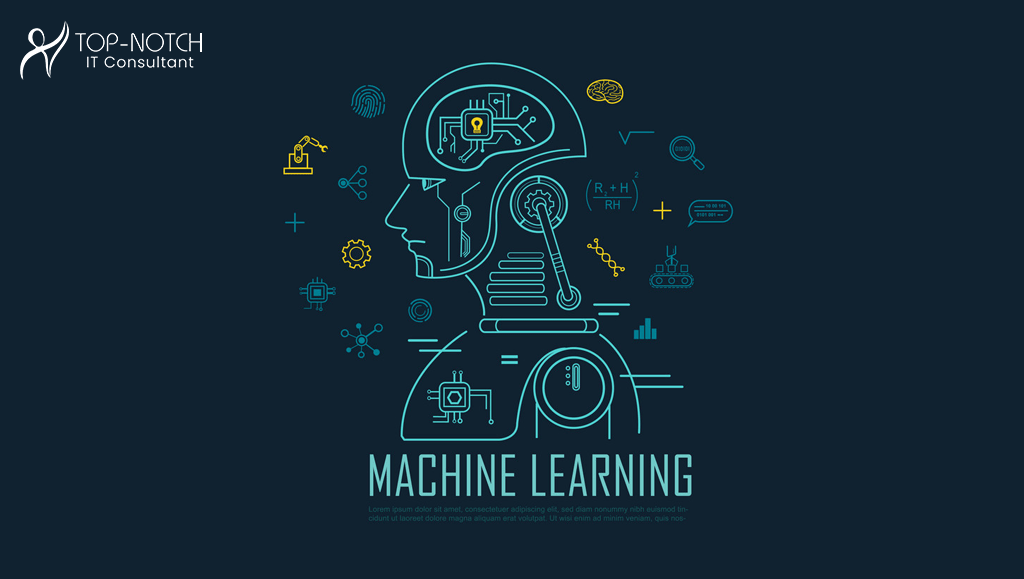
Artificial intelligence (AI) and Machine Learning (ML) are emerging as one of the transformative forces in the world of IT operations. These are not only the catchwords, rather they are bringing in a revolution in how IT departments are managing and optimizing their infrastructure, services, resources and performance. Right from automation of day-to-day tasks to the prediction and mitigation of some potential problems, Machine Learning with AI are invaluable assets for the smooth and effective functioning of IT operations.

What is AI and ML?

Artificial intelligence simulates the human intelligence process by machines, primarily computer systems. These processes involve learning, reasoning and self-rectifying. Learning is the acquisition of information and rules for making use of the information and reasoning is using those rules to reach a specified conclusion.

Machine learning is a subset of artificial intelligence that comprises the use of statistical models and algorithms that allow computers to perform some specified tasks without making use of obvious data. Rather, they depend on patterns and implications obtained from data. In simple language, machine learning facilitates IT systems learning from historical data and experiences to enhance future actions.

Important components of AI and ML that are revolutionizing IT operations

Predictive analytics

Both AI and ML can predict issues in IT sectors even before they happen. They go through the past data, look for patterns and can indicate if there is something wrong. This means that it checks all relevant stuff such as the memory being consumed, the amount of data that is moving around and the response time of the apps. It spots warning signs early by seeing when things are not acting like they usually should. With AI and ML, it’s easy to learn about the issues before they cause any kind of problems. When problems are fixed before they happen, it saves a lot of time and money thus cutting down the downtime by 25-30%.

Automation and effectiveness

AI and ML also help in making IT work fast with less worrying about automating them. This involves:

  • Doing general tasks such as updating the servers or sorting out help requests.
  • Adjustment of resources depending on what is required, and which can save money.
  • Checking where resources are getting wasted.
  • Making use of chatbots for common questions which means few tickets for the assistance desk.

By managing those routine tasks, AI and ML allows IT teams to work on relevant projects. This not only assists in saving time but also assists in avoiding mistakes that might happen when any task is done manually.

AI and Machine Learning IT security

With more complicated cyberattacks occurring, we require robust security and this is where the role of AI comes in. Traditional methods cannot assist in keeping up with those new threats. Machine learning can check network activity, find new malware, know if somebody’s account has been hacked because of any unusual activity and react instantly. This is quite faster than what humans can do.

Things that AI does to keep systems safe are

  • Watches how users are behaving for catching hacked accounts
  • Seeing strange network activity that does not look normal
  • Rapidly understand malware to find out if it is some new variant
  • Test defense through simulation of attacks

Enhanced decision making

AI and ML offer IT sectors some actionable insights obtained from data analysis which helps in making better decisions like resources, planning of capacity and optimization of performance. By using data-driven insights, it becomes easy for organizations to make the right decisions that increase overall IT performance.

AI and ML applications in IT operations

Machine Learning and AI for Network management

AI and Machine learning techniques can keep an eye on network traffic in real-time, recognizing anomalies and possible security threats. They can also do optimization of network performance through adjustment of configurations depending on existing use patterns.

Incident governance

AI-based systems can sort and arrange IT incidents depending on how severe they are and what is their impact. Algorithms of machine learning also give suggestions for resolutions depending on historical data, speed up the incident resolution process and decrease downtime.

Capableness planning

Machine learning models can analyze data used for the prediction of future demands for IT resources. This ability allows the IT teams to plan their capacity with more accuracy, making sure that all resources are available whenever required without over-provision.

IT service control

With chatbots and other virtual assistants handling daily IT service requests like resetting passwords and installations of software, IT staff can focus more on complicated tasks. Similarly, ML algorithms also help in analyzing service desk data to recognize common problems and give suggestions for enhancing the service management process.

What is the future of AI and ML in the IT sector?

The future of AI and machine learning looks promising with consistent advancements in those technologies, it will bring in greater benefits.  Here are a few trends to watch for:

Automation of IT operations

With AI and ML technologies evolving, we can expect a rise in completely autonomous IT operations. These systems can manage and optimize IT infrastructure without any human interference, thereby increasing effectiveness and decreasing the cost of operations.

Innovative predictive analysis

Upcoming advancements in ML will result in sophisticated abilities of predictive analysis. IT teams can predict and prohibit problems with more accuracy, making sure there are continual operations and enhanced performance.

IoT integration

AI and ML integration with IoT will give rise to several new possibilities for IT operations. AI-integrated IoT systems allow real-time monitoring and management of various devices, starting from servers and networking equipment to smart building systems.

Conclusion

Machine Learning and AI in IT operations are game changers for the management of computers and networks. They are making use of smart technologies to make things run smoothly, fixing issues before they become big and keeping the digital world safe. With consistent advancements, they are making management of IT stuff easy, assisting everything run smoothly and keeping the digital world up and running without any glitches.

10 tips for implementing serverless computing for your IT projects

Serverless computing is a cloud computing prototype where the service provides only the required amount of resources on demand. The main benefit of serverless computing is you are charged for the exact amount of resources as compared with cloud computing where you have to buy bandwidth units and resources are allocated all the time no matter whether in use or not.

The name serverless does not mean that servers are eliminated from the applications. Rather, it refers to the fact that the provider is responsible for managing and maintaining backend services on a used basis.  A company procuring serverless computing resources from a provider has to pay only for the resources that their application uses. Thus, they do not have to reserve and make payment for a fixed amount of bandwidth, because the service is auto-scaling.

Know how serverless computing functions?

Serverless computing depends on functions or to be more specified functions as a service. It is a kind of service model that facilitates the developers to run code in the cloud without requiring them to develop packages or manage infrastructure. Then the applications are broken into specific functions that one can invoke and measure individually.

Advantages of serverless computing

Fully scalable

In serverless architecture vs traditional architecture, one of the major advantages of serverless computing is developers will not have to upload codes to the servers or carry out backend configuration to release a functional version of any application. Administrators also will not have to do upgrades of current servers or add any servers. With automatic scalability, you will not have to think about setting up the underlying infrastructure.

Easy for deployment

The use of serverless computing solutions helps in the rapid deployment of resources as compared to when you use a cloud computing model. Rather than taking weeks or months for deployment, you can do it within a few minutes. The reason behind rapid deployment is that you will not have to take care of the infrastructure.

No requirement of infrastructure

Because developers have to use somebody else’s computer to implement their serverless functions, therefore, is no infrastructure for maintenance.

No management of server or software

Even if serverless computing takes place on servers, developers are not required to deal with the servers.

Fault tolerance

Developers are not liable for the fault tolerance of the serverless architecture. It is the cloud provider that offers the IT infrastructure for computing, storing, networking and databases that automatically allocate the account for every type of failure.

Low cost

The expenses of serverless computing are less than compared to cloud-based services. Developers are charged only for the time of implementation and not using the server unit. With serverless models, customers can avoid the expenses associated with the operation of servers like access authorization, detection of presence, safety, processing of images and other such costs.

No upfront investment

As you will only make payment for running codes, there is no upfront investment required.

Less latency

With serverless computing functions there is less latency for the end users. The serverless functions do not operate from any chosen origin server, and thus there is not only one location in which any end user’s traffic is directed. In such cases, the data centers if all cloud providers are used and the function is executed by the nearest server, thus decreasing the time of response.

Simple backend code

Because the application is not hosted on the origin server, its code can be run from any place.

To implement serverless computing for IT projects, it is important to keep some important tips in mind

10 tips to implement serverless computing for your IT jobs

Properly understand the use case

Before you dive into serverless computing, it is important to know whether it fits well to your project’s requirements. Serverless architecture is best for those applications whose workloads, microservices and event functions are not predictable. It is necessary to evaluate all your project needs and find out if serverless computing can offer the required scalability and cost-effectiveness.

Select the right provider.

Many cloud providers are providing serverless computing services like AWS, Azure functions and Google Cloud functions. Every provider possesses their unique features, ecosystem integrations and pricing models. It is important to make a comparison of those options to find the one that suits best your project needs and current infrastructure.

Design for scalability

One of the main benefits of serverless computing is its capability to scale automatically depending on demand. Make sure that the architecture of your application can manage rapid scaling. Make use of stateless functions, as they can easily scale, design your data storage and get access to patterns for supporting high concurrency.

Optimization of cold start times

In serverless computing cold start latency is challenging, especially for those applications that are time-sensitive. Do optimization of your functions for decreasing cold start time by making use of light frameworks, and maintaining function dependencies. Configure functions with the right memory and implementation environments.

Keep monitoring and managing costs.

Serverless computing can be cost-efficient, but when not managed in the right manner, it gets rapidly escalated. Keep an eye on usage and set up warnings for unpredicted spikes. Make use of cost-management tools offered by the cloud provider for tracking and optimizing costs. Take into consideration the implementation of throttling and rate limitation for controlling costs in association with high usage.

Execute strong server security best practices.

Safety is very important for any IT project. For the implementation of serverless computing, you should focus on safety functions, management permission and making sure there is proper data privacy. Make use of IAM roles and policies for restricting access, encrypting sensitive data, doing regular audits and updating security settings.

Make use of event-based architecture.

Serverless computing thrives well in event-driven architecture. It is vital to design applications in a way that will trigger functions depending on events like HTTP requests, changes in database or message queue updates. This approach facilitates effective and responsive management of several tasks without requiring consistent running servers.

Use tools for logging and supervising.

Efficient logging and monitoring are important for the maintenance and debugging of serverless applications. Make use of built-in tools such as AWS CloudWatch Azure Monitor, or Google Stackdriver for keeping track of function implementations, performance metrics and error logs. Set up alerts and dashboards for managing proactively and troubleshooting all your applications.

Ensure mitigation of vendor lock-in.

While you get several advantages with serverless computing, it can also result in vendor lock-in because of the exclusive nature of the cloud provider services. For mitigation of this risk, it is important to design the services and functions to be as cloud-agnostic as possible. Make use of standard frameworks and libraries and take into consideration multi-cloud plans that allow easy migration among the providers.

Make a plan for disaster recovery and backups.

Disaster recovery and backups of data are important components of any IT project. For serverless computing, it is important to make sure that your functions and data are being backed up regularly and that you have some disaster recovery plan in place. Make use of cross-region replications, and automated backups for protection of your data and keep availability of applications in case there are failures.

Conclusion

Implementation of serverless computing can offer several benefits to IT projects such as scalability, simple infrastructure management and cost-effectiveness. With a proper understanding of the serverless use cases, selecting the correct provider and ensuring best practices in designing security and cost management, it’s easy to leverage serverless architecture for enhancing IT projects.

Book an appointment