DevOps: The Bridge Between Development and IT Operations

In this vibrant world of software development, one of the terms that has become highly popular is DevOps. But what is DevOps and how it is revolutionizing the way we think about software development and its functioning?  Most importantly how it is bridging the gap that exists between development and IT operations and how devOps improves IT operations?

Know about DevOps

DevOps is a set of practices that bridges software development and IT operations. It aims to lessen the life cycle of the system development and offer consistent delivery with high-quality software. DevOps is not only a set of processes but a culture or in simple terms a mindset that assists in the creation of a collaborative environment where development, testing and release of the software happens very quickly, dependably and frequently.

Important principles of DevOps in software development

DevOps is channelled by many important principles which include automation, infrastructure as code, consistent integration, consistent deployment and supervision. These principles form the basic foundation of DevOps practices and allow teams to deliver software that is efficient and dependable.

  • Easy collaboration

DevOps encourages strong communication between software development and functioning teams. This gives a boost to a shared understanding of the goals and difficulties, resulting in good decision-making and problem-solving.

  • Automation

Repeating tasks are automated using tools and scripts, thereby freeing up valuable time for operations and developers to focus on high-level activities.

  • Consistent integration and delivery

Code alterations are incorporated and tested, facilitating early detection and issue-solving. This consistent feedback loop makes sure that there is a smooth transition from development to production.

  • Infrastructure as code

Provisioning of Infrastructure and configuration is treated as code, allowing constant and repeating deployments. This helps in decreasing manual errors and simplifies the management of infrastructure.

  • Responsibility is shared

Both the teams of Dev and Ops share the responsibility for the whole lifecycle of software delivery. This boosts a culture of dependability and ownership.

  • Supervision and observability

These are two important aspects of DevOps that allow teams to gain insights into the health and performance of their infrastructure as well as applications. Through the execution of strong monitoring and logging solutions, teams can find and troubleshoot problems in real-time, making sure there is reliability and accessibility of their systems.

  • Cloud-native technologies

DevOps boosts the adoption of cloud-native architectures and technologies like microservices, serverless computing and containers. Those technologies allow teams to build and deploy applications more effectively, using the measurability and flexibility of cloud platforms such as AWS, Google Cloud and Azure.

  • Continuous feedback

Collecting feedback from the stakeholders and the users is vital for consistent improvement. Consistent feedback includes collection and analysis of feedback to uniform future development and efforts for delivering. This practice assists teams in understanding the user requirements and making some data-driven decisions for enhancing the software quality.

  • Agile software growth

Agile methodologies emphasize collaboration, suppleness and consistent enhancement. Through the adoption of agile practices, the team of development can function more efficiently with the functioning teams, thereby boosting a more responsive and adaptive process of development.

  • Manages configuration

Managing the changes or alterations of the software systems and infrastructure is required for the maintenance of constancy and dependability. Management of configuration mainly includes tracking and control of changes to make sure that all systems stay stable and easily predictable even if they evolve.

  • Continuous Improvement

The practice of continuously improving and refining the software development and delivery process is considered the foundation of DevOps. By adopting a culture of incremental improvement, teams are able to experiment, learn, and adapt, thereby driving continuous performance improvement.

Benefits of DevOps

DevOps enables organizations to deliver good software fast and more dependably. All its principles of automation and consistent enhancement drive inventions and effectiveness in the software development industry, thereby making it a vital approach for the latest software teams. Accepting DevOps is not only an option but it is required for remaining competitive in this highly evolving technology landscape.

  • The fast cycle of development: DevOps helps streamline and automate several aspects of development, with quick releases and updates.
  • Enhanced collaboration: As the barriers between development and operations are broken down, DevOps boosts good communication and collaboration between teams.
  • Increased quality: Automation and consistent testing give rise to high software quality and fewer defects.
  • Enhanced measurability: DevOps practices make it easy to measure applications and infrastructure to meet increasing demand.
  • Strong stability: Automated supervision and quick response to problems means systems are stable and robust.

Conclusion

DevOps for IT operations is something more than methodology and it is a change in mindset that gives importance to collaboration, automation and consistent enhancement in the world of software development and operations. It bridges the gap that exists between the developers and the team of operation. Whether a developer, a system administrator or someone who is starting their tech journey, a better understanding and adopting DevOps can be a substantial leap in your career.

To conclude, DevOps plays a vital role in bridging the gap that exists between development and IT operations in the present day job market.

Automation in IT: How Robotic Process Automation (RPA) is Changing the Workforce

Recently, Robotic Automation Process Automation has arisen as one of the strong tools for organizations who are looking to enhance efficiency through the automation of repeating tasks. By using software robots for carrying out daily and rule-based activities, RPA provides substantial benefits in relation to cost, savings as well as speed.

What is Robotic Process Automation?

RPA is a kind of business process automation that facilitates anybody to outline an instruction set for a robot. They can mimic maximum human-computer interactions for carrying out several error-free works at high speed as well as volume.

In simple terms, RPA automation in the IT industry or Robotic Process Automation is a type of software technology that assists robots in evaluating human actions for interacting with digital systems and software. I can use technology supported by business logic and planned inputs for automation of business processes.

Making use of RPA platforms helps businesses in the configuration of software or a robot for capturing responses and interpretation of basic operations such as processing of transactions, manipulation of data, triggering responses and communication with various digital systems.

Utilization of an RPA system ranges from something as simple as the generation of automatic response to an email for deploying several bots, each of them programmed for the automation of jobs in an ERP system.

How Robotic Process Automation is Revolutionizing the Workforce?

Rather than identifying RPA as one of the potential competitors, employees should make use of it as one of the tools for enhancing operational effectiveness. Here are some of the benefits of Robotic Process Automation:

Increased productivity

Bots help in generalizing high work volumes with enhanced accuracy and speed, not like humans. This helps employees spend more time on other important tasks that require dynamic thinking and also real-time decision-making. For instance, conversational bots manage data entry tasks, for which employees can focus more on analyzing trends to make effective decisions. 

More satisfaction among employees

When employees get relief from their routine work, their satisfaction is affected positively. RPA decreases the burden of daily work, which in turn allows employees to carry out value-added work. This process helps in enhancing the satisfaction level with the job of employees and results in enhanced motivation.

Opportunities for upskilling and reskilling

With the right execution of RPA, it is possible to speak about the efficient increase in workforce qualifications and skills. When cognitive tasks are done through software robots, employees can supervise those processes, learn about novel technologies and carry out other activities that need higher skills. Ike for example. Workers change from data administration tasks to analytic workflows. In this way, employees or the workforce get more exposure in their career pathways thereby adding more value to their company.

Human-robot collaboration

RPA manages daily tasks such as processing orders and updating the records and IPA makes an addition of AI for doing analysis of consumer sentiments and making adjustments of responses. This facilitates the RPA bots for managing the repeating tasks effectively and IPA addresses nuanced interactions, escalating complicated problems to the human agents.

Where RPA automation is used?

Consumer service: Organizations can make use of RPA to offer good consumer services through automation of the entire process of consumer interaction. The software robots can do automation of the contact centre tasks, verify the e-signatures, upload the scanned documents and verify the information for automated approval and rejections. Through RPA you can attend to more and more customer requests through automation of the steps.

Accounting services

Businesses make use of the RPA both in accounting and financial service sectors for procedures such as data management and many more. The software robot can manage boring tasks in general accounting, functional accounting, budgeting, exchange of payments and closing along with processing the insurance claims.

Healthcare

In the healthcare sector, RPA can help medical facilities manage patient records, customer support billing, analytics, reporting and account management.

Human resources

The HR organization and the departments can make use of the RPA platform tasks such as onboarding as well as offboarding, updating of employee data and submission of timesheets.

Supply chain sector

Software tools can be utilized in supply chain management for procuring, automated order processing and payments, monitoring levels of inventory and tracking of shipments.

Several perspectives on Robotic Process Automation

Best impact on business

Several experts think that RPA assists organizations in streamlining the process, decreasing costs and enhancing consumer satisfaction. The technology allows businesses to deliver fast, more perfect services while optimizing the workforce.

Challenges

The critics of RPA have given caution that the technology is not the solution for all kinds of process based issues. RPA execution needs proper planning, skilled resources and consistent monitoring. In addition, they believe that some of the processes are not good for automation because of complicated decision-making.

Conclusion

The difficulties you face in businesses need the integration of automation solutions. Automation is a rapidly growing sector of technology and you must make use of it and there are several automation tools for the IT workforce. Be a dynamic enterprise by mixing the digital workers, systems and human workers through automated processes. In addition, you can also manage all your processes right from back office to consumer support by using RPA.

The Role of Edge Computing in IoT: Benefits and Challenges

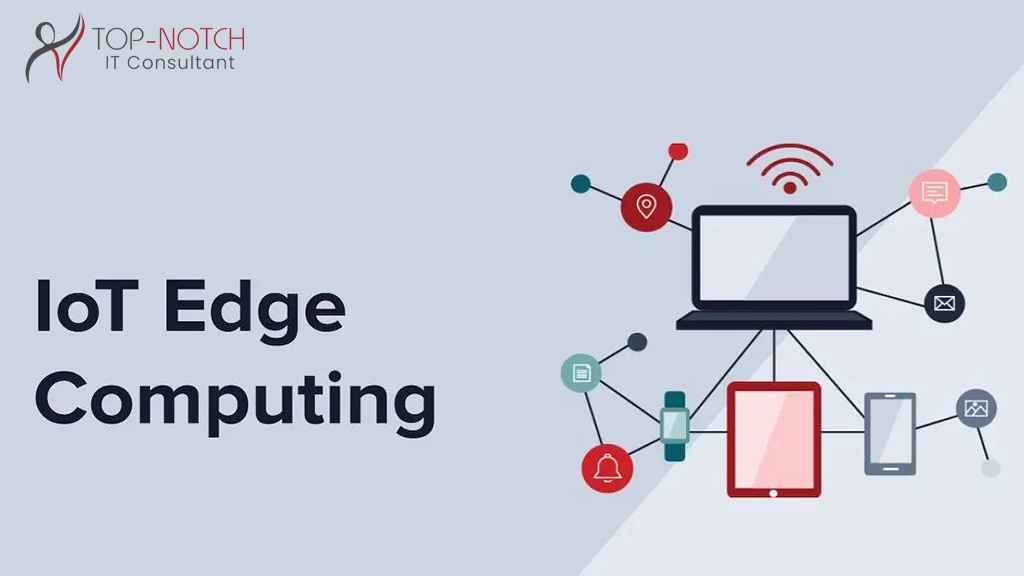
Internet of Things applications often function as a system for monitoring, that collects and does analysis of data to trigger informed actions. IoT applications may process data on a daily basis or respond to external triggers. Edge computing IoT benefits by moving all computing processes close to the device, decreasing network traffic and latency and allowing real-time insights.

With the increasing number of device connections and IoT data, the importance of edge computing development has also increased. With the invention of IoT edge computing, the latency problems associated with the cloud have also been resolved as it generates data close to the source of origin.

When IoT and edge computing combine, they act like powerful assets for rapidly analyzing data in real-time. Because of this, the demand for IoT Development companies has increased, and as a result, businesses are integrating IoT into edge computing.

Know what is edge computing?

According to Gartner, edge computing is a part of distributed computing topology where all processed data is present near the edge that people get. In simple words, edge computing is the processing of and analysis of network edges close to the point of action. Edge computing devices apply an on-device approach to data that is kept locally instead of sending limitless data streams to the cloud.

Role of Edge Computing in IoT

Edge computing serves several business purposes in the IoT landscape. The distributed computing model untethered IoT devices from all kinds of latency and connectivity issues while solving impossible IoT use cases.

The required technology creates the backbone of IoT application development which also includes low-latency decision-making, real-time IoT data needs, classification of data and many more.

How does it work?

The sensors of IoT create a lot of data that can be transferred instantly, then processed and stored by making use of cloud computing. When data is required by businesses, the cloud analyzes the data received before it sends its response to the device. The whole process takes only a few seconds, but there can be delays or interruptions.

But when several kinds of edge computing are used in IoT devices, it is not needed to send data from the sensors anywhere. Rather the nearest network node is liable for processing of data and immediate response whenever any action is taken. Because of this, the devices no longer depend on internet connection and can make use of functions as standalone network nodes.

Edge computing in IoT: Benefits

IoT Edge intelligence computing solutions bring several benefits to the IoT. Here are some of them:

Decreases the cost of operations:

Edge computing allows organizations to reduce the costs of bandwidth with the data processing prior to crossing WAN. By addition, edge computing for pre-aggregating the data decreases the costs substantially. Even the manufacturers make use of cloud computing to prevent the maintenance of remote machinery. It helps in filtering the data and allowing only the threshold violations and anomalies.

Enhanced data security

In the present-day world. There is a high risk for businesses having enterprise mobility solutions and consistent transmission of data from the devices to the cloud. Edge computing helps in decentralizing and distributing data among various devices, thereby making it very difficult for hackers to take down the entire network with just a single attack. This enhanced data safety to a great extent thereby benefiting businesses.

Decreased latency

Several business applications have stringent latency needs but it can be a matter of concern when the matter is about application security. This is where edge computing comes in handy as it can help in speeding up communication between edge devices and the cloud. Moreover, the platforms of edge computing also assist in bringing in the power of processing close to the devices, substantially decreasing the latency and strain.

Good cybersecurity

Implementation of IoT edge computing solutions assists businesses in enhancing cybersecurity while maintaining IoT devices secured from attack. Cloud data are more prone to attacks because of their centralized nature and also hackers try to break the information into a single network. Here the distribution of information to several devices by making use of edge computing results in enhanced cybersecurity. Maintaining business data safe is vital for success and maybe this is the reason why businesses are using IoT app development services from popular organizations.

Increased measurability: Quick business measurability is a must in this era of IoT and distributed edge notes are more measurable as compared to big data centers. Edge computing helps businesses in scaling up their IoT networking without any reference to available storage.

Edge computing for IoT: Challenges

Edge computing benefits businesses overall but there can be many challenges when it is implemented in IoT.

Hardware limits

Edge computing devices have limited computer power, storage and memory which makes it challenging to run complicated applications and process big amounts of data.

Network connection

Edge devices might have intermittent or less bandwidth network connectivity, which is challenging for applications that need real-time communication or sync of data with the cloud or other devices.

Safety and privacy

Edge devices IoT might be more vulnerable to all physical attacks as compared to cloud data centres. In addition, the processing of sensitive data at the edge increases concerns of privacy that should be addressed.

Management of data

Management of data at the edge can be difficult because of the distributed nature of the edge computing devices, less storage capacity and intermittent network connection.

Management of resources

Effectively managing the computational memory and storage of edge devices is important for the optimization of the performance and edge applications’ cost.

Executing edge computing in IoT might face several challenges but with upcoming trends and developments like 5G connectivity, server-less edge computing and AI and Machine learning, those challenges can be addressed and allow more advanced and effective edge applications.

Conclusion

The increased use of IoT has brought in a new set of challenges about the processing of data, bandwidth, privacy, latency and safety. Edge computing has risen as an important solution to address those challenges, increasing the effectiveness and performance of IoT applications. With IoT edge intelligence computing processing data close to its source, edge computing decreases latency, does optimization of bandwidth and allows real-time decision making.

Future of Robotics: Trends to Watch Over the Decade

A revolution in robotics is on the verge of breakthrough by the high speed of technological advancements and increased demand for automation. Emerging robotics technologies made possible by artificial intelligence, machine learning, and advanced materials are ready to transform industries, reshape economies, and redefine human interaction with robots. Next-generation Robotics would have to unfold through the dimensions of the sectors – smarter, more efficient, and increasingly automated.

Artificial Intelligence integration into robotics

The most important trend with which Emerging Robotics Technologies is extensively permeated is the seamless integration of artificial intelligence into robotic systems. Essentially, AI-powered robots are becoming smart enough to decide, learn, and adapt in a specific environment to new tasks.

With these advancements, Next-generation Robotics are reaching new milestones where robots will begin to perform actions like complex surgical procedures, autonomous navigation, human-robot collaboration in manufacturing, among others. AI-powered robots are no longer bound to predefined actions but are able to interpret data and predict outcomes; this eventually broadens their utility across industries.

Emergence of collaborative robots 

Cobots are one of the critical areas of the future of robotics. They have been designed and built to be safely working alongside people, which changes workplaces by increasing productivity and reducing injury risks.

Cobots are gaining increasing traction in all the sectors of service industries, such as manufacturing, healthcare, logistics, and retail, to complete tasks that require strength, precision, and repetition and leave the high-level thinking and creative work to human beings.

Breakthroughs in autonomous vehicles and drones

Although still at their nascent stages, autonomous vehicles and drones are some of the next emerging robotics technologies that will revolutionize transportation, logistics, and other ways of delivering.  As is the case with autonomous drones, so with agriculture, construction, and disaster management. Sensors with AI make it possible for the drones to carry out crop monitoring, inspection of infrastructure, and searching for victims of natural disasters with a very high degree of precision.

Human-Robot interaction and emotional intelligence

The new age of Robotics is not merely the functionality that it defines, but the improvement of man-robot interaction as well. Robots are engineered and developed to understand and respond and even predict human emotions. Increasingly, these emotionally intelligent robots are being used in caregiving, customer service, and education. As these systems become more intuitive and empathetic, robotics will transcend their physical tasks to take care of emotional and social needs among humans and robots, hence fostering deeper intimacy between humans and robots.

Robotics in healthcare

Healthcare is among the most promising fields of the emerging robotics technologies. Robots already assist in surgeries, conduct diagnostics, and streamline patient care. The following decade will witness more complex healthcare robots, from micro-robots designed to deliver targeted drug therapies to exoskeletons assisting in rehabilitation for human physical exercise.

Healthcare robotics will surely bring a transformation of accessibility, efficiency, and patient outcomes from all over the world.

Advancements in robotics in manufacturing and supply chain

Manufacturing has been considered to be the domain of robotics, but now comes emerging robotics technologies that will take automation to the new horizon. Smart factories with AI-driven robots are streamlining production lines, reducing waste, and increasing output.

Robots add control over inventory, packaging, and last-mile delivery to the supply chain. Autonomous mobile robots are now embedded in the warehouse stream, creating efficiency and a reduced need for people.

This new generation robotics can guarantee well-functioning goods flows while eliminating labor shortages, from increasing demands for speedier deliveries.

Robotic impact on environmental sustainability

Robotics is slowly playing a good role in addressing key global challenges. From monitoring ecosystems to reducing industrial waste, new robotics technologies are being exploited towards sustainable futures.

For instance, underwater robots assist in research regarding marine life and also in monitoring the amount of pollution while agricultural robots improve crop yields by employing precision farming techniques. Robots for recycling and waste management also are attracting attention, making processes that involve much labor and seem ineffective completely efficient.

As there is increased focus on sustainable development, the influence of robotics on environmental conservation will mark one area of growth in the next ten years.

Conclusion

These are Emerging robotics technologies, and here are next-generation robots. They are transformed not just by changing industries but also by changing the face of human lives-and impact every other area of society.

As we welcome and embrace this exciting future, new innovations, teamwork, and ethics will determine how we realize the full potential for robotics. The next ten years will be the epoch of peerless progress wherein the technological world will not only get more and more efficient but also redefine our relationship with technology.

Book an appointment