Automation in IT: How Robotic Process Automation (RPA) is Changing the Workforce

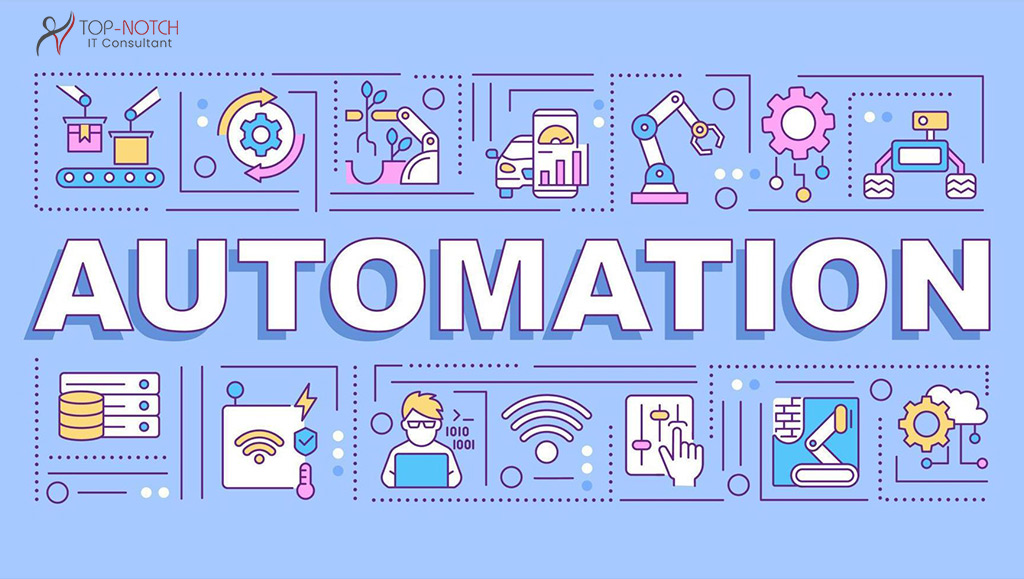
Recently, Robotic Automation Process Automation has arisen as one of the strong tools for organizations who are looking to enhance efficiency through the automation of repeating tasks. By using software robots for carrying out daily and rule-based activities, RPA provides substantial benefits in relation to cost, savings as well as speed.

What is Robotic Process Automation?

RPA is a kind of business process automation that facilitates anybody to outline an instruction set for a robot. They can mimic maximum human-computer interactions for carrying out several error-free works at high speed as well as volume.

In simple terms, RPA automation in the IT industry or Robotic Process Automation is a type of software technology that assists robots in evaluating human actions for interacting with digital systems and software. I can use technology supported by business logic and planned inputs for automation of business processes.

Making use of RPA platforms helps businesses in the configuration of software or a robot for capturing responses and interpretation of basic operations such as processing of transactions, manipulation of data, triggering responses and communication with various digital systems.

Utilization of an RPA system ranges from something as simple as the generation of automatic response to an email for deploying several bots, each of them programmed for the automation of jobs in an ERP system.

How Robotic Process Automation is Revolutionizing the Workforce?

Rather than identifying RPA as one of the potential competitors, employees should make use of it as one of the tools for enhancing operational effectiveness. Here are some of the benefits of Robotic Process Automation:

Increased productivity

Bots help in generalizing high work volumes with enhanced accuracy and speed, not like humans. This helps employees spend more time on other important tasks that require dynamic thinking and also real-time decision-making. For instance, conversational bots manage data entry tasks, for which employees can focus more on analyzing trends to make effective decisions. 

More satisfaction among employees

When employees get relief from their routine work, their satisfaction is affected positively. RPA decreases the burden of daily work, which in turn allows employees to carry out value-added work. This process helps in enhancing the satisfaction level with the job of employees and results in enhanced motivation.

Opportunities for upskilling and reskilling

With the right execution of RPA, it is possible to speak about the efficient increase in workforce qualifications and skills. When cognitive tasks are done through software robots, employees can supervise those processes, learn about novel technologies and carry out other activities that need higher skills. Ike for example. Workers change from data administration tasks to analytic workflows. In this way, employees or the workforce get more exposure in their career pathways thereby adding more value to their company.

Human-robot collaboration

RPA manages daily tasks such as processing orders and updating the records and IPA makes an addition of AI for doing analysis of consumer sentiments and making adjustments of responses. This facilitates the RPA bots for managing the repeating tasks effectively and IPA addresses nuanced interactions, escalating complicated problems to the human agents.
Where RPA automation is used?

Consumer service: Organizations can make use of RPA to offer good consumer services through automation of the entire process of consumer interaction. The software robots can do automation of the contact centre tasks, verify the e-signatures, upload the scanned documents and verify the information for automated approval and rejections. Through RPA you can attend to more and more customer requests through automation of the steps.

Accounting services

Businesses make use of the RPA both in accounting and financial service sectors for procedures such as data management and many more. The software robot can manage boring tasks in general accounting, functional accounting, budgeting, exchange of payments and closing along with processing the insurance claims.

Healthcare

In the healthcare sector, RPA can help medical facilities manage patient records, customer support billing, analytics, reporting and account management.

Human resources

The HR organization and the departments can make use of the RPA platform tasks such as onboarding as well as offboarding, updating of employee data and submission of timesheets.

Supply chain sector

Software tools can be utilized in supply chain management for procuring, automated order processing and payments, monitoring levels of inventory and tracking of shipments.

Several perspectives on Robotic Process Automation

Best impact on business

Several experts think that RPA assists organizations in streamlining the process, decreasing costs and enhancing consumer satisfaction. The technology allows businesses to deliver fast, more perfect services while optimizing the workforce.

Challenges

The critics of RPA have given caution that the technology is not the solution for all kinds of process based issues. RPA execution needs proper planning, skilled resources and consistent monitoring. In addition, they believe that some of the processes are not good for automation because of complicated decision-making.

Conclusion

The difficulties you face in businesses need the integration of automation solutions. Automation is a rapidly growing sector of technology and you must make use of it and there are several automation tools for the IT workforce. Be a dynamic enterprise by mixing the digital workers, systems and human workers through automated processes. In addition, you can also manage all your processes right from back office to consumer support by using RPA.

The Role of Edge Computing in IoT: Benefits and Challenges

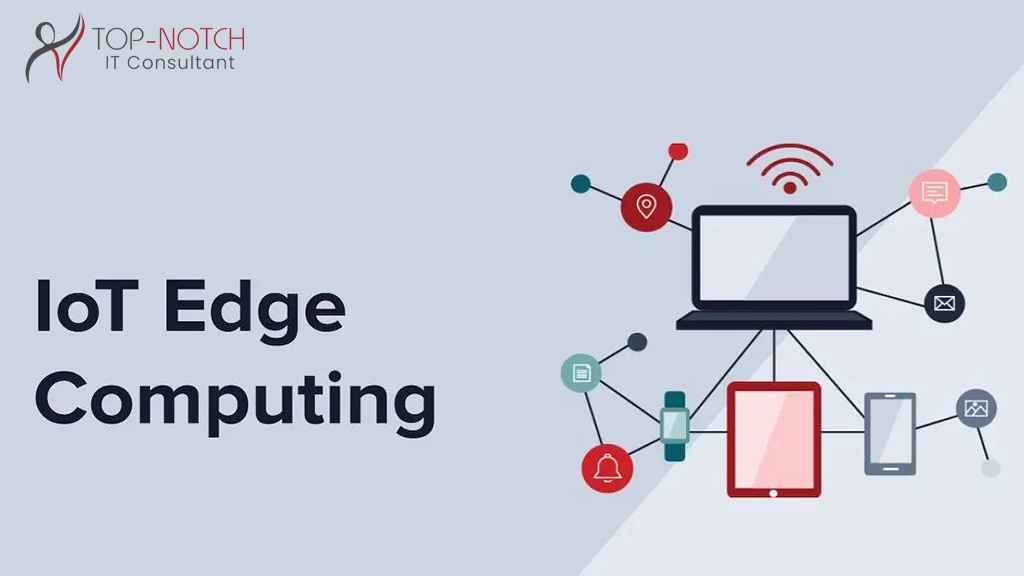
Internet of Things applications often function as a system for monitoring, that collects and does analysis of data to trigger informed actions. IoT applications may process data on a daily basis or respond to external triggers. Edge computing IoT benefits by moving all computing processes close to the device, decreasing network traffic and latency and allowing real-time insights.

With the increasing number of device connections and IoT data, the importance of edge computing development has also increased. With the invention of IoT edge computing, the latency problems associated with the cloud have also been resolved as it generates data close to the source of origin.

When IoT and edge computing combine, they act like powerful assets for rapidly analyzing data in real-time. Because of this, the demand for IoT Development companies has increased, and as a result, businesses are integrating IoT into edge computing.

Know what is edge computing?

According to Gartner, edge computing is a part of distributed computing topology where all processed data is present near the edge that people get. In simple words, edge computing is the processing of and analysis of network edges close to the point of action. Edge computing devices apply an on-device approach to data that is kept locally instead of sending limitless data streams to the cloud.

Role of Edge Computing in IoT

Edge computing serves several business purposes in the IoT landscape. The distributed computing model untethered IoT devices from all kinds of latency and connectivity issues while solving impossible IoT use cases.

The required technology creates the backbone of IoT application development which also includes low-latency decision-making, real-time IoT data needs, classification of data and many more.

How does it work?

The sensors of IoT create a lot of data that can be transferred instantly, then processed and stored by making use of cloud computing. When data is required by businesses, the cloud analyzes the data received before it sends its response to the device. The whole process takes only a few seconds, but there can be delays or interruptions.

But when several kinds of edge computing are used in IoT devices, it is not needed to send data from the sensors anywhere. Rather the nearest network node is liable for processing of data and immediate response whenever any action is taken. Because of this, the devices no longer depend on internet connection and can make use of functions as standalone network nodes.

Edge computing in IoT: Benefits

IoT Edge intelligence computing solutions bring several benefits to the IoT. Here are some of them:

Decreases the cost of operations:

Edge computing allows organizations to reduce the costs of bandwidth with the data processing prior to crossing WAN. By addition, edge computing for pre-aggregating the data decreases the costs substantially. Even the manufacturers make use of cloud computing to prevent the maintenance of remote machinery. It helps in filtering the data and allowing only the threshold violations and anomalies.

Enhanced data security

In the present-day world. There is a high risk for businesses having enterprise mobility solutions and consistent transmission of data from the devices to the cloud. Edge computing helps in decentralizing and distributing data among various devices, thereby making it very difficult for hackers to take down the entire network with just a single attack. This enhanced data safety to a great extent thereby benefiting businesses.

Decreased latency

Several business applications have stringent latency needs but it can be a matter of concern when the matter is about application security. This is where edge computing comes in handy as it can help in speeding up communication between edge devices and the cloud. Moreover, the platforms of edge computing also assist in bringing in the power of processing close to the devices, substantially decreasing the latency and strain.

Good cybersecurity

Implementation of IoT edge computing solutions assists businesses in enhancing cybersecurity while maintaining IoT devices secured from attack. Cloud data are more prone to attacks because of their centralized nature and also hackers try to break the information into a single network. Here the distribution of information to several devices by making use of edge computing results in enhanced cybersecurity. Maintaining business data safe is vital for success and maybe this is the reason why businesses are using IoT app development services from popular organizations.

Increased measurability: Quick business measurability is a must in this era of IoT and distributed edge notes are more measurable as compared to big data centers. Edge computing helps businesses in scaling up their IoT networking without any reference to available storage.

Edge computing for IoT: Challenges

Edge computing benefits businesses overall but there can be many challenges when it is implemented in IoT.

Hardware limits

Edge computing devices have limited computer power, storage and memory which makes it challenging to run complicated applications and process big amounts of data.

Network connection

Edge devices might have intermittent or less bandwidth network connectivity, which is challenging for applications that need real-time communication or sync of data with the cloud or other devices.

Safety and privacy

Edge devices IoT might be more vulnerable to all physical attacks as compared to cloud data centres. In addition, the processing of sensitive data at the edge increases concerns of privacy that should be addressed.

Management of data

Management of data at the edge can be difficult because of the distributed nature of the edge computing devices, less storage capacity and intermittent network connection.

Management of resources

Effectively managing the computational memory and storage of edge devices is important for the optimization of the performance and edge applications’ cost.

Executing edge computing in IoT might face several challenges but with upcoming trends and developments like 5G connectivity, server-less edge computing and AI and Machine learning, those challenges can be addressed and allow more advanced and effective edge applications.

Conclusion

The increased use of IoT has brought in a new set of challenges about the processing of data, bandwidth, privacy, latency and safety. Edge computing has risen as an important solution to address those challenges, increasing the effectiveness and performance of IoT applications. With IoT edge intelligence computing processing data close to its source, edge computing decreases latency, does optimization of bandwidth and allows real-time decision making.

Future of Robotics: Trends to Watch Over the Decade

A revolution in robotics is on the verge of breakthrough by the high speed of technological advancements and increased demand for automation. Emerging robotics technologies made possible by artificial intelligence, machine learning, and advanced materials are ready to transform industries, reshape economies, and redefine human interaction with robots. Next-generation Robotics would have to unfold through the dimensions of the sectors – smarter, more efficient, and increasingly automated.

Artificial Intelligence integration into robotics

The most important trend with which Emerging Robotics Technologies is extensively permeated is the seamless integration of artificial intelligence into robotic systems. Essentially, AI-powered robots are becoming smart enough to decide, learn, and adapt in a specific environment to new tasks.

With these advancements, Next-generation Robotics are reaching new milestones where robots will begin to perform actions like complex surgical procedures, autonomous navigation, human-robot collaboration in manufacturing, among others. AI-powered robots are no longer bound to predefined actions but are able to interpret data and predict outcomes; this eventually broadens their utility across industries.

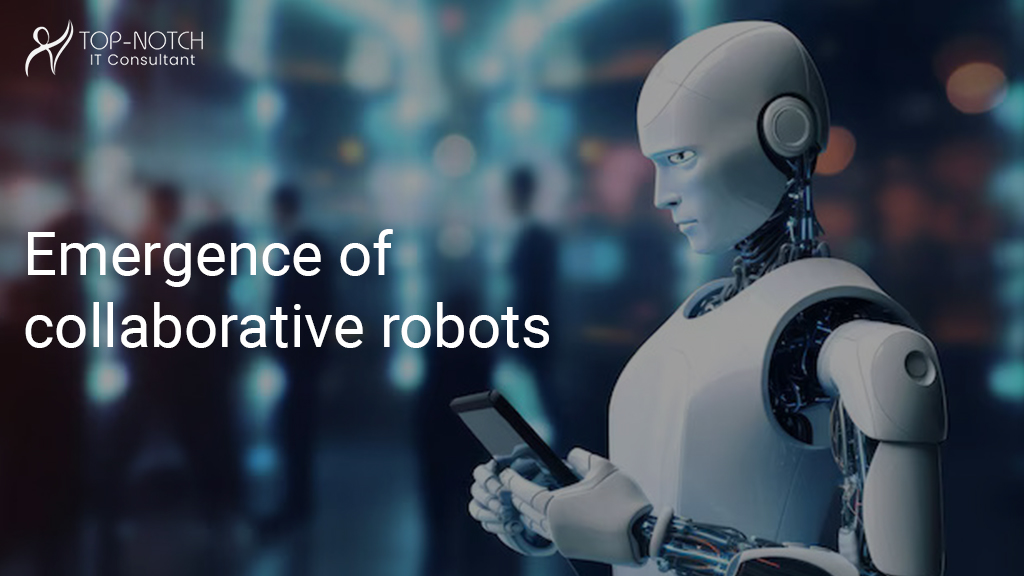
Emergence of collaborative robots 

Cobots are one of the critical areas of the future of robotics. They have been designed and built to be safely working alongside people, which changes workplaces by increasing productivity and reducing injury risks.

Cobots are gaining increasing traction in all the sectors of service industries, such as manufacturing, healthcare, logistics, and retail, to complete tasks that require strength, precision, and repetition and leave the high-level thinking and creative work to human beings.

Breakthroughs in autonomous vehicles and drones

Although still at their nascent stages, autonomous vehicles and drones are some of the next emerging robotics technologies that will revolutionize transportation, logistics, and other ways of delivering.  As is the case with autonomous drones, so with agriculture, construction, and disaster management. Sensors with AI make it possible for the drones to carry out crop monitoring, inspection of infrastructure, and searching for victims of natural disasters with a very high degree of precision.

Human-Robot interaction and emotional intelligence

The new age of Robotics is not merely the functionality that it defines, but the improvement of man-robot interaction as well. Robots are engineered and developed to understand and respond and even predict human emotions. Increasingly, these emotionally intelligent robots are being used in caregiving, customer service, and education. As these systems become more intuitive and empathetic, robotics will transcend their physical tasks to take care of emotional and social needs among humans and robots, hence fostering deeper intimacy between humans and robots.

Robotics in healthcare

Healthcare is among the most promising fields of the emerging robotics technologies. Robots already assist in surgeries, conduct diagnostics, and streamline patient care. The following decade will witness more complex healthcare robots, from micro-robots designed to deliver targeted drug therapies to exoskeletons assisting in rehabilitation for human physical exercise.

Healthcare robotics will surely bring a transformation of accessibility, efficiency, and patient outcomes from all over the world.

Advancements in robotics in manufacturing and supply chain

Manufacturing has been considered to be the domain of robotics, but now comes emerging robotics technologies that will take automation to the new horizon. Smart factories with AI-driven robots are streamlining production lines, reducing waste, and increasing output.

Robots add control over inventory, packaging, and last-mile delivery to the supply chain. Autonomous mobile robots are now embedded in the warehouse stream, creating efficiency and a reduced need for people.

This new generation robotics can guarantee well-functioning goods flows while eliminating labor shortages, from increasing demands for speedier deliveries.

Robotic impact on environmental sustainability

Robotics is slowly playing a good role in addressing key global challenges. From monitoring ecosystems to reducing industrial waste, new robotics technologies are being exploited towards sustainable futures.

For instance, underwater robots assist in research regarding marine life and also in monitoring the amount of pollution while agricultural robots improve crop yields by employing precision farming techniques. Robots for recycling and waste management also are attracting attention, making processes that involve much labor and seem ineffective completely efficient.

As there is increased focus on sustainable development, the influence of robotics on environmental conservation will mark one area of growth in the next ten years.

Conclusion

These are Emerging robotics technologies, and here are next-generation robots. They are transformed not just by changing industries but also by changing the face of human lives-and impact every other area of society.

As we welcome and embrace this exciting future, new innovations, teamwork, and ethics will determine how we realize the full potential for robotics. The next ten years will be the epoch of peerless progress wherein the technological world will not only get more and more efficient but also redefine our relationship with technology.

How Open-Source Technologies Are Shaping Modern Software Development?

Open-source technologies have emerged as an important force in this fast-paced space of software development, bringing in new forces, models of collaboration, and efficiency. They are free to use, modify, and distribute. The backbone of modern software development is these open-source technologies-its building blocks for developers and organizations to create robust, scalable, and cost-effective solutions. 

Lets focus on how open-source technologies are reshaping the future of the software development ecosystem and why it is fundamental to the future of technology.

Benefits of open source software

Encouraging collaboration and innovation

A collaborative model by nature, the open-source software model draws upon the expertise of developers from all over the world to improve software, fix bugs, or develop new features. This collective effort at innovation through diverse ideas and experiences thus enables rapid progress.

Communities like GitHub, GitLab, and Apache provide places where developers collaborate on projects, share code, and learn from each other. Open-source initiatives in terms of Kubernetes, TensorFlow, and the Linux operating system show how global collaboration can give origin to industry-leading tools that power businesses and developers all over the world.

Faster development cycles

In today’s fast-paced tech world, time-to-market is critical. Open-source technologies provide ready-to-use frameworks, libraries, and tools that significantly reduce development time. Instead of building software from scratch, developers can leverage existing open-source solutions to focus on innovation and customization.

For instance, React.js and Angular have become standard frameworks with which the front-end development is done. At the backend, operations are streamlined with Django and Flask. In turn, that saves developers time and ensures that they are building on proven and reliable technology.

Cost-Effectiveness for businesses

The most prominent benefit of open-source technologies is that they are cost-effective. They do not come with expensive licensing fees compared to proprietary software. It helps businesses, especially start-up and small enterprises, to acquire unparalleled cutting-edge technology and space without blowing their budget sky-high.

Furthermore, open-source software does not carry hidden costs for premium features, and scaling for a business is always highly efficient. Such flexibility provides any organization with great financial freedom to maximize ROI.

Improving security and dependability

Contrary to some misconceptions about open-source software being less secure, it is one of the most significant strengths, coupled with transparency. Projects are put under tough scrutiny from thousands of developers who spot, identify, and erase vulnerabilities quickly. So, much of the open review process frequently leads to more secure and reliable software than proprietary approaches.

For instance, the widely used open-source cryptography library OpenSSL is constantly audited by various experts across the world. Similarly, Kubernetes is an open-source system of running applications, orchestrating containers, and scaling solutions, with constant contributions toward its security enhancements, hence a known, reliable choice for enterprises.

Growing customization and flexibility

Proprietary software usually provides rigid structures with limited options for customization and can largely hamper innovation. Open-source technologies are in a different category altogether with unlimited flexibility. Developers can change source code to meet specific requirements, integrate new features, or adapt the software to unique workflows.

Such industries that have specific needs, such as healthcare, finance, and manufacturing are very critical in terms of adaptability. Platforms such as Apache Hadoop allow open-source platforms for tailoring solutions related to big data, and tools like WordPress empower businesses to create customized websites and applications with ease.

Open source software trends and cloud computing

Open-source technologies are critical in this domain of digital transformation, and they have evolved to become a significant driver of digital transformation. Organizations can effectively roll out and manage cloud environments with platforms like OpenStack and Kubernetes. They are the enablers of hybrid and multi-cloud strategies, giving businesses the flexibility to maintain full control over their infrastructure.

The difference open source makes is that leading cloud providers like AWS, Google Cloud, and Microsoft Azure integrate open-source solutions within their ecosystems, changing the future of cloud computing.

Encouraging AI and Machine Learning innovation

Open source technologies and modern development  have significantly led to the wide improvement of AI and ML. Powerful frameworks – indeed, the most available ones for building AI models – are TensorFlow, PyTorch, and Scikit-learn. These widen the barrier of entry so small teams, or even one-person teams, can try out and implement AI-driven solutions.

Open datasets such as Kaggle and ImageNet provide fuel for further innovations in AI by offering a source of material for training and testing models. This open-source ethos, then, democratizes AI, so it’s not simply the work of multinational tech companies.

Community driven development

The open-source projects thrive on an active community of developers that serve as a support network. Such communities provide documentation, tutorials, and forums to seek and share insights to collaborate towards a solution.

For example, Python and JavaScript users are the most active in the tech sphere, and their communities support language adoption across the globe. This type of community makes learning faster for an individual developer, but also triggers feelings of belonging and common cause.

The Future of open-source technologies

The trajectory of open-source technologies is expected to be the most adopted and influential. With the emergence of edge computing, Internet of Things, and blockchain, everything will definitely be more open-source-based in terms of development and implementation.

Again, the promise of digital sovereignty and reducing dependency on proprietary software will encourage more governments and businesses to advocate for open source. Projects being sustainability centered, ethical AI forerunners, and connectivity drivers worldwide will also continue to be very lively in the open-source platform.

Conclusion

Open-source technologies are at the core of modern software development, shaping how applications are built, deployed, and maintained. With the collaboration it encourages, security boost it provides, and innovation that it fuels, open-source technologies are indispensable for both developers and organizations.

Open source technologies will enable business and individual engagement as challenges are addressed and adoption grows. It will make software development more accessible, efficient, and inclusive. Indeed, in a world more and more defined by digital transformation, open source is not just a methodology but a movement for progress across industries.

The Rise of E-Commerce: Why Online Shopping is Dominating Retail

E-commerce is the newest and fastest-growing retail trend in the last decades, giving online shopping the high convenience level, variety, and personalization levels previously unimaginable, hence available to everyone across borders and oceans to catch the attention of consumers.Why consumer prefers online shopping? Because it is now possible to buy virtually anything-from grocery items to electronic gadgets, clothing, and cosmetics-by clicking a few times.

But why is e-commerce is growing and what does the future hold for this digital revolution?

Convenience

E-commerce has transformed convenience for shoppers.Coming to e-commerce vs traditional retail,  traditional shopping requires one to go to physical stores during its operation hours, fight crowds, and sometimes wait in long queues. E-commerce eliminates all such barriers. A shopper can browse products at any time of the day, from anywhere in the world, through a smartphone, tablet, or computer.

This benefit also goes to the delivery side. Same day or next day delivery innovations mean that consumers do not have to wait for a long period before receiving their purchases. Subscription models such as Amazon Prime make even this more efficient, promising fast and free shipping to subscribers. This time-saving and effort-saving factor made e-commerce the indispensable evolution for modern consumers who have hectic lifestyles in cities.

Huge product line and accessibility

Physical space will always be a limiting factor in brick-and-mortar stores. But e-commerce stores operate in digital space; it’s almost an infinite boundless space. As a result, it can display an unlimited number of products that every consumer requires and prefers.

Whether it’s niche items like handcrafted goods or internationally renowned brands, e-commerce platforms often offer choices that might not be in local stores. Also, these platforms give customers the ability to easily compare products from numerous sellers, allowing them to make a better decision. User reviews and ratings further enhance this with a degree of transparency, ensuring shoppers are confident in their purchases.

Cost efficiency for consumers and businesses

The impact of e-commerce is huge on the economics of retail. Online shopping, in many ways, is cheaper due to periodic offers, discounts, and sometimes even dynamic pricing strategies. The major seasonal sales occur on the occasions of Black Friday, Cyber Monday, and India’s Big Billion Days and draw massive traffic as folks look to find the best deals.

In contrast, businesses operating an online store incur much less overhead cost compared to running a physical storefront. Minimized overheads include rents, utilities, and staffing are avoided, thus saving for the business. As a result, many companies have managed to pass on the cost-cutting measures to customers, making it beneficial in every sense of the word to push the e-commerce economy.

Technology

Advanced technology has driven the rapid growth of e-commerce. Behind the platforms that have created individualized shopping experiences are artificial intelligence and machine learning. For instance, AI-based algorithms scan the history of how the buyer has browsed products or purchased them to suggest the best match according to the shopper’s preferences.

Some of the other advanced features that help customers view what products-whether furniture or clothing-will actually look like in real life before purchasing include augmented reality tools. Payment gateways are also safe and easy to process, and advanced logistics systems ensure timely delivery. All these technologies do not just increase the satisfaction level of customers but also create trust in online platforms.

Even newer technologies like blockchain are expected to further strengthen e-commerce by allowing more transparent supply chains and secured payment systems. chatbots and AI-powered customer service are improving the way businesses interact with shoppers, offering real-time assistance and quick issue resolution.

Accessibility and global access

E-commerce opens the global market to any business enterprise, regardless of size, as it breaks the geographical barrier. An online platform can connect the small business located in a remote area to its customers in another country. In particular, this has been a boon for small and medium-sized enterprises. SMEs can directly compete with bigger corporations.

E-commerce connects consumers directly to the world through their fingertips. International shipping options make available products previously inaccessible. Marketplaces such as Alibaba, eBay, and Amazon have created a global marketplace and have driven cross-border trade and commercial cultural exchange.

Social media integration and engagement

E-commerce has emerged as a powerful tool that links shopping with entertainment and then community building. Every kind of platform, Instagram, Facebook, and even TikTok, already implements shopping into their discovery and purchase feature so that users do not have to leave the app for it. Another trend that is a result of this has been influencer marketing wherein creators are showcasing products to their followers.

Future of  retail shopping

The future of e-commerce promises much. With the advent of drones delivering packages, autonomous cars perhaps to be launched, and robots speeding up the process, logistics are assured to become better and faster. Voice commerce would make shopping even more effortless through virtual assistants like Alexa and Google Assistant.

Personalization will reach new heights as AI continues to evolve, offering hyper-tailored recommendations and shopping experiences. Virtual and augmented reality tools will further enhance online shopping by creating immersive, interactive environments. Blockchain technology may revolutionize supply chain transparency, giving consumers greater insight into product origins and ethical practices.

Conclusion

E-commerce is an extensive shift in the retail industry. Convenience, variety, and innovation have taken a different hue and shape through an e-commerce platform-winning over the hearts and wallets of consumers across the globe. The pandemic only accelerated its growth, but its dominance has deep roots in technological advancement and customer-centric strategies.

Now, while taking into consideration the real challenges of cybersecurity and sustainability, the potential for growth and innovation in e-commerce is without any limits. As technology continues to advance, online shopping will only become more integrated into our lives and have a resounding impact on shaping the future of retail.

How AI and ML are Shaping the Future of DevOps?

With the rapid evolution of technology, one of the important DevOps trends is getting more attention: the integration of AI and ML in DevOps. Through automation of difficult tasks, prediction of system problems, and optimization of workflows, AI and ML are transforming the way DevOps teams operate.

These technologies are no longer simply buzzwords; they are gradually becoming indispensable tools for businesses that aim to attain fast delivery cycles, increase effectiveness, and produce superior software.

In this rapidly evolving atmosphere of software development and functions, the incorporation of Artificial Intelligence and Machine Learning gives a new definition to the old practices of DevOps. By using AI and ML, organizations can attain high levels of effectiveness, automation and predictive abilities thereby increasing their DevOps processes.

Let’s explore the transformative effect of AI and ML on DevOps and their contribution to shaping its future.

In traditional DevOps practices, several manual tasks like code testing, implementation and system supervision become bottlenecks and ML provides solutions through the automation of repeating processes and facilitates the DevOps engineers in focusing on planned initiatives.

Predictive analytics and active monitoring

AI-supported predictive analytics allows DevOps teams to anticipate and prevent system failures even before they occur. Machine learning algorithms can do an analysis of historical data, recognize patterns and do prediction of potential downtimes, lessen errors and increase system dependability, which is important in a DevOps atmosphere focused on consistent delivery and implementation.

Automates daily tasks

Automation is one of the important components of DevOps and AI takes it to the next level by allowing the systems to self-learn from data and enhance their automation abilities with time. Machine learning algorithms can help in the automation of daily tasks such as log analysis, anomaly detection and safety monitoring, decreasing the requirement for manual interference and allowing teams to focus on a high level of problem-solving.

AI for CI/CD

AI and ML can help in the optimization of Continuous Integration and Continuous Deployment pipelines by recognizing ineffectiveness and giving suggestions for some improvements. The Machine learning models can evaluate the test results to decrease the false positives, do automation of code testing and give recommendations for changes for deployment planning, thereby streamlining the whole process of development.

More security with DevSecOps

When security is highly important in DevOps, AI-driven tools are offering some novel ways to enhance safety measures. DevSecOps, which is the integration of safety into DevOps practices, reaps benefits because of the ability of AI with DevOps to detect vulnerabilities in real-time, automating the safety checks and also through prediction of potential threats. This assists in maintaining a safe pipeline while also enhancing effectiveness.

Optimization of resources

One of the primary contributions of AI and ML in DevOps is the optimization of allocation of resources. Through proper analysis of past performance data, AI can give good recommendations of the best ways to allocate computing resources in peak times, lessening the costs while also maintaining high performance. This is beneficial in cloud-based environments, where measuring and cost-effectiveness are important.

How AI and ML are shaping the future of DevOps?

Enhanced speed and agility: Because of automation by AI workflows are accelerating, facilitating code implementations and short cycles of release. With complete automated pipelines that can easily do prediction, detection and fixing of issues without any human intervention, the whole development life cycle also speeds up.

  • Enhanced quality: With AI-driven testing and supervision, the bugs are recognized early in the cycle of development, resulting in high-quality software.
  • Cost-effectiveness: Through automation of resource allocation and optimization of the workflows, AI assists businesses in saving the cost of operation.
  • Proactive problem solving: With predictive analytics, teams can address potential issues before they start affecting production, decreasing the downtime.
  • Smart management of infrastructure: Ai-powered infrastructure becomes more autonomous, which makes it capable of doing self-optimization and adapting to altering conditions in real time.
  • Good collaboration: AI tools help enhance collaboration between the development, security teams and operations by offering shared insights and automation of repeating tasks.

Streamline of DevOps process with AI and ML.

AI and ML can help streamline the DevOps process in several ways such as

  • Consistent testing: AI and ML algorithms can be utilized in the automation of testing, recognizing defects early in the cycle of development and offering feedback to the developers in real-time.
  • Smart automation: AI and ML can automate repeating tasks like code review, building deployment and supervision, giving time for the developers to focus on complicated tasks.
  • Analysis of primary cause: When any kind of issue arises, AI and ML for DevOps can assist in the identification of the root cause of the issues rapidly so that it is easy to address them promptly.

Conclusion

With the advancement of AI and ML, their effects on DevOps will also grow stronger day by day. Through automation of daily tasks to increase system safety, these technologies are shaping up the future of DevOps. The trends of DevOps that surround AI and ML are pointing towards a future where pipelines are inventive, fast and effective. By accepting those inventions, it becomes easy for businesses to stay ahead of the curve and drive consistent enhancement in the development of software and implementation process.

Understanding Cybersecurity Simple Tips to Protect Yourself Online

Cybersecurity is one such phrase that you might hear and think might be very complicated. But in truth, protecting data and information is easier than it seems, and cybersecurity for beginners is one of the common practices. It is primarily important for the adoption of good practices as well because, at present, we are dependent on technology and the internet for almost everything. So, when you think cybersecurity is a concept that is very difficult to grasp, do not fret.

What is cybersecurity?

Cybersecurity is protecting systems, networks and programs from various kinds of digital attacks. Those cyberattacks are mainly aimed at getting access, altering and damaging sensitive information, to extort money from various users through interruption of normal business processes or ransomware.

Execution of efficient cybersecurity steps is specifically difficult today as there are more devices available than people and attackers nowadays are more inventive. A right cybersecurity posture has several layers of protection that are spread all over the computers, programs, data or networks that one wants to keep safe. In any organization, a proper threat management gateway system can help in the automation of integrations all over the products and speed up important safety operations functions such as detection, scrutinization and remediation. People, procedures along with technology should all complement each other for the creation of efficient protection from cyberattacks.

  • People: Users should understand and stay in compliance with basic data protection and privacy safety principles such as selecting strong passwords, remaining wary of the attachments in emails and keeping a backup of data.
  • Procedures: Organizations should have a framework for dealing with both attempted as well as successful cyberattacks.
  • Technology: Technology is required to give both organizations and individuals the security tools of the computer required for protecting themselves from various cyberattacks. The three main entities should be protected such as the endpoint devices, smart devices and the routers along with the cloud.

Simple cybersecurity tips for beginners for enhancing your security and protecting yourself online

Do not open mail from strangers

When you get a phishing email with attached malware, you should not download the attachment as it can damage your network. This is because drive-by downloads can cause installation of the malware on your hard drive even if you do not agree to download them. In many cases, a drive-by download can disguise itself as some update or any other innocuous “yes/no” questionnaires’ and even some cyber-savvy can get fooled by this. This is the reason, it’s a good idea never to open any emails from addresses that you do not know and follow all online security best practices.

Keep your devices up-to-date

When you do not have any security software, devices or any web browsers up-to-date, turn on automatic updates. Updates often can fix some of the critical safety holes that might have been detected in your device or any of your programs.

Make use of strong passwords

There are many ways to protect yourself from identity issues online and making use of strong passwords is one of them. Even now there are some people who make use of passwords such as “123456”. Do not use such passwords and also do not use your birth date or dog’s name etc. The best password suggestion is that which you can remember but will be difficult for other people to guess.

Two-factor authentication

Two-factor authentication needs you to make verification of your identity after logging in by using your username or password. In many cases, you are asked to verify your identity by making an entry of a code that is sent by text to your phone or by email. Some other times you are required to answer a security question. When there is an availability option available, opt-in. It might take you some extra seconds to log in to your accounts, but it decreases the chance of other people logging in to your accounts.

Never click on strange-looking links

Viruses and other kinds of malware often spread as you click on any link that comes from someone you know. When you receive any link that has a strange look from any trusted friend or any family member, contact them to ask if the link that you have received has been sent on purpose. In the other way, you can also copy and paste that link into some reputable link checker. But never click on the link and do safe internet browsing.

Do not use unsafe public WI-Fi

If you are thinking about how to protect yourself from a cybersecurity attack, then whenever possible, try avoiding accessing unsafe public WI-fi on your devices. Using it makes you highly vulnerable to some of the predatory practices. If you are using it, try to avoid any compromising information such as your social security number or any financial information on any of the websites. It’s better to make use of a VPN, for browsing whenever you are not at home. This helps in encrypting the data you are sending and receiving, which makes it hard to intercept.

Keep backup of data regularly

If you become a victim of any malware attacks like ransomware, you might not get back your data unless you back it up. But with backup, you can make some kind of security breach less problematic. When a hacker encrypts your data and demands some ransom, it is not going to be that big deal.Staying secure online might feel like a challenge, but it should not be. If you are still unsure how to protect yourself online against all scams, then treat all online interactions in the same way as you would with any stranger who is walking down the street and cybersecurity essentials.

From Prototype to Production A Full Stack Developer’s Workflow

In the world of modern web and app development, the role of a full-stack developer is important. Full-stack developers possess the ability to work on the complete development spectrum, starting from the front-end user interface to backend databases and server-side logic. They offer an all-inclusive approach to application development lifecycle.

One important responsibility of a full-stack developer is managing the journey from prototype to production. This includes developing, testing, and deploying a solution that is not only functional but also measurable.

Let’s discuss the full stack workflow of a full-stack developer, which covers the important stages of transforming a prototype to a production-ready application.

Planning and gathering requirements

Before development, a full-stack developer should engaged in proper planning and gathering of needs. This stage makes the foundation for the project and makes sure that the end product meets user expectations and business requirements. The full-stack developers work in close association with the stakeholders, product managers along designers to understand the application’s goals, the required features and the total scope of the project.

Some of the important tasks in this phase are:

  • Significant user stories and use cases
  • Mapping architecture of the application and the technology stack
  • Recognizing the third-party integrations and the APIs
  • Estimation of time of development and allocation of resources.

When a full-stack developer has a proper plan in place, the full-stack developer can initiate a prototype that shows the main functionality of the applications.

Development of the prototype

A prototype is a kind of working model of any application that offers a rough idea about the look, feel and behavior of the final product. While it might not include every feature or polished design element, a prototype is important for visualization and validation of the concept in the initial development process.

  • Frontend development:  In this phase, the focus is on developing the front end of any application. This includes the creation of the user interface by making use of technologies like HTML, JavaScript and CSS. Latest frontend frameworks such as React, Vue.Js or Angular are commonly used for building dynamic and highly interactive user interfaces. Full stack developers should make sure that the designs are highly responsive, user friendly and align well with the goals of the prototype.
  • Backend set up: Simultaneously, the backend of the application is also set up and this involves selecting the server side, frameworks and the programming language. A database should also be chosen like MySQL, MongoDB or PostgreSQL for storage and management of data. The prototype should not yet need complete integration between the backend and front end, but it is vital for outlining how data flows between them.

Development of Iterative

On approval of the prototype, the full stack developers should move to the development of Iterative. This stage includes breaking down the application into small tasks and working on specific features in sprints. This assists in the development of a team for delivering incremental updates and obtaining feedback along the way during end to end product development.

  • Frontend development: The full stack developers improve the frontend through integration of more complicated UI components, optimization of performance and making sure that there is compatibility of cross-browser. Tools such as Sass or even LESS can be utilized for enhancing CSS, and libraries such as Axios or Fetch are integrated for managing HTTP requests for obtaining data.
  • Backend development and Incorporation of API: On the backend the full stack developers start writing the business logic of the application, setting up and integrating third-party services. Safety measures like authentication and authorization, are also executed for the protection of data of the application and user interactions.
  • Design and management of database: Database schemas are completely designed, making sure that effective storage and data retrieval are there. ORM tools such as Sequelize or SQLAlchemy are used for allowing database operations and migrations. Through the process of development, the developers make use of version control systems such as Git to track the changes, collaborate with the team members and make sure there is code stability.

Testing and quality assurance

Testing is an important part of the workflow of the full stack development. It makes sure that all applications are working as expected and free from all major bugs or safety vulnerabilities prior to moving to production.

  • Unit testing and integration testing: Unit tests are written for both the backend and frontend code to verify all individual components function perfectly. Tools such as Jest or Mocha are utilized for writing unit tests.
  • Incorporation testing: It focuses on the verification of different sections of the system to make it work together flawlessly. API end joints are also tested to make sure that data is flowing perfectly between the client and the server.
  1. User acceptance testing: When the application is functional, then user acceptance testing is done for validation that the application meets the user requirements. Feedback from the users or the stakeholders is then collected and any kind of problems or suggestions for improvements are also addressed.

Integration of deployment and DevOps

With the tested application and validation, the next step is deployment. In this phase, there is the setting up of the production environment, making sure that the application is stable and accessible for the users.

  • Cloud deployment: Full stack developers make use of cloud platforms such as AWS, Microsoft Azure or Google Cloud for hosting applications. Services like Docker, as well as Kubernetes, are also used for orchestration and containerization, thereby making sure that the app is measurable and can manage high traffic.
  • Consistent incorporation: For streamlining deployment, the full stack developers can use CI/CD pipelines by making use of tools such as Jenkins, Gitlab or CircleCI. These pipelines help in the automation of testing, development and deployment of code changes, thereby facilitating fast and reliable releases.
  • Tracking and maintenance: After deployment, the full-stack developers keep track of the performance and safety of the application. Tools such as New Relic, DataDOg or Prometheus are utilized in tracking metrics such as uptime, loading time and error rates. Right maintenance and updates are required to make sure that the app runs properly in production.

Measuring applications

When the production ready apps  start gaining more users, it might require scaling to manage enhanced traffic and data. Full stack developers mainly work on optimization of performance, management of databases and making sure that architecture can scale horizontally or vertically.

Some of the important scaling strategies are caching, balancing load and optimization of the database.

Conclusion

Starting from initial planning and prototyping to measuring, deploying and production, the full-stack developer’s workflow is a complicated but rewarding pathway. The full stack developers should navigate both the frontend development and backend development, making sure that there is consistent testing and quality assurance and managing deployment with DevOps practices. On gaining proficiency in this workflow, the full stack developers can easily provide strong, measurable applications that meet the requirements of both the users and businesses.

AutoML for Edge Computing: Bringing Machine Learning to IoT Devices

With the rapid growth of the Internet of Things and rising demand for real-time data processing, the requirement for inventive technologies that bring machine learning to edge devices is enhancing. One of the favorable advancements in this area is the merging of Automated Machine Learning or AutoML and Edge computing. By allowing IoT devices to process data locally and run machine learning models independently, businesses can find some new levels of intelligence, measurability and effectiveness.

Understand AutoML

Automated Machine Learning is one of the approaches that help in the automation of end to end process of application of machine learning in real-world problems. It makes complex tasks of ML model development like processing of data, selection of features, and choosing mode along hyperparameter optimization very simple. Generally, those tasks need expertise in data science and machine learning but with AutoML, developers and businesses can build and implement premium quality models with less manual intervention.

The important value of AutoML is in its capability for democratizing machine learning. Through automation of the time-consuming and technical part of the model development, AutoML authorizes a broad range of users, along with those with less ML knowledge for the creation and deployment of predictive models. It is somewhat valuable in organizations where speed and accuracy are important, but access is a special machine-learning talent.

Understand Edge computing

Edge computing is the practice of data processing at the “edge” of the network, close to where the data is created. Instead of depending on a centralized cloud system, along with edge devices, like IoT sensors, and wearables, carry out computations locally. This decreases the requirement for data to go to distant cloud servers for analysis, lessening latency and enhancing the speed at which the insights can be derived from the data.

Edge computing is helpful in those applications that need real-time decision-making or where bandwidth limitations make it impractical to send big volumes of data to the cloud. For instance, autonomous vehicles, smart cities along with industrial automation benefit from edge computing by processing data on-site and allowing real-time actions.

AutoML for Edge computing

The merging of AutoML and Edge computing offers a substantial leap in the way machine learning models are being deployed and used. AutoML for edge computing allows IoT devices not only to process the data locally but also to learn, adapt and enhance the model’s overtime without relying on various cloud resources.

This is one of the game changers for many reasons. Edge devices also function in environments where connection to the cloud might be unreliable, making cloud-based machine learning impractical. Real-time processing is important in many applications of loT and the latency in association with sending data to the cloud for analysis can be slow because of time-sensitive work.

Advantages of AutoML for Edge Computing

  • Decision-making in real-time: One of the important benefits of edge computing is the capability to process data in real-time. AutoML increases its ability through automation of the creation and deployment of machine learning models on edge devices. This implies that IoT devices can make relevant decisions in milliseconds. This capability is important in industries like healthcare, smart cities and manufacturing, where any delays in data processing can result in safety risks or functional inefficiencies.
  • Decreased latency and use of bandwidth: By data processing locally on the device, edge computing substantially decreases the latency in association with data sent to the cloud for analysis. AutoML also does optimization by allowing edge devices to run optimized ML models directly, removing the requirement for consistent communication with the cloud servers. Decreasing the amount of data transferred to the cloud also assists in the conservation of bandwidth, which is relevant in environments having fewer connectivity options.
  • Increased privacy and safety: Privacy and safety are two major concerns in today’s interconnected world. By maintaining the processing of data at the edge, sensitive information can be analyzed locally, decreasing the risk of getting exposed at the time of transmission to the cloud. AutoML facilitates models to be trained, evaluated and also updated on edge devices.
  • Measurability and flexibility: The use of AutoML at the edge helps in great scalability in IoT deployments. With the number of connected devices growing, sending data to a centralized cloud can become impractical because of bandwidth limitations and increasing costs. For edge computing, each device can do processing of data on an independent basis and run its own ML models, decreasing the load on centralized infrastructure.
  • Cost-effective: The expenses of cloud-based computing can rapidly increase, especially while dealing with big volumes of data from several IoT devices. By processing data locally and decreasing the need for consistent cloud interaction, edge computing substantially lessens the overall cost of operation.

Conclusion

Edge computing with AutoML is revolutionizing the way IoT devices operate in the connected world. Organizations can open up new intelligence levels, speed, and effectiveness thereby decreasing costs and making sure there is great privacy and safety.

AI-as-a-service (AIaaS) for Developers: Building Intelligent Apps Without a Data Science Team

Artificial Intelligence development is being adopted widely and executed in several industries. Developing AI models from the beginning is not only expensive but also consumes a lot of time. This is the reason several businesses are opting for artificial intelligence or AI as a service partnership with renowned third-party service providers. It assists organizations in personalizing the existing solutions so that it suits their requirements. The AI applications are easily measurable and are a good option for small, medium and big businesses.

Let’s learn more about AI as a service and how an AI product development company helps businesses in the seamless integration of artificial intelligence in their internal processes.

Different kinds of AIaas

AI as a service helps businesses in decreasing the risk of making investments in novel technology. Organizations can also start small and increase as per their budgets. In addition, they can also do experiments and try various applications, cloud platforms etc. to find the right combination. For instance, a third-party AIaas provider that is a certified partner of Google, AWS and Azure can assist a business in selecting the best cloud solution for their requirements.

Furthermore, recent AI technology needs supportive hardware such as GPUs, APIs etc. The elements are well taken care of by the provider of AIaas so that the apps run on remote cloud platforms and businesses can easily save resources for important operations.

Types of AI-as-a-service

Here are some of the major kinds of AI as a service provided by AI product development companies:

Digital assistants and bots

Chatbots and assistance are one of the common kinds of AIaas provided by service providers. These bots are developed by making use of AI, ML and NLP technologies for understanding human input and providing customized output. They are utilized in consumer service departments to decrease pressure on the executives and offer 24*7*365 days of support to the consumers. In the same way, digital assistance is utilized for setting up self-servicing solutions for the employees so that they can rapidly access the information they require or troubleshoot the device whenever required.

Machine learning frameworks

Developers make use of the ML frameworks for building AI models for various purposes. The frameworks offer the basic foundation and can be mixed with third-party applications. However, the process of building an ML data pipeline is complicated and needs domain expertise. Businesses can select AIaas as a part of AI/ML development services for accessing ML models as well as frameworks relevant to their processes. The models are well used on the cloud servers of the provider and save computing resources for the whole enterprise.

APIs

It is an application programming interface that helps in connecting two or more software for enhanced functionality. In general, businesses make use of AIaas APis for NLP abilities which assist in the analysis of sentiment, knowledge mapping, data extraction etc. In the same manner, computer vision assists in extracting elements from the images and videos to help the building applications for face recognition, ID verification etc. APIs also facilitate various software in consistently sharing data and delivering the outcome to the end user.

AI as a service benefit for developers

AIAaS offers developers the required tools and framework for integrating AI into applications without needing to develop AI models from the beginning. Here are a few ways by which AIaas benefits the developers:

Decreased complications

AIaas extracts the maximum complexity involved in AI and ML. Developers do not have to worry about developing and training machine learning models, managing the infrastructure or dealing with complicated algorithms. Rather they can make use of the ready-to-use AI models and services, thereby speeding up the development and decreasing the learning curve for executing AI features.

Fast time for marketing

With AIaas developers focusing on developing applications and services instead of spending time on developing AI models from the beginning. This facilitates rapid prototyping and testing, resulting in a fast time for the market for AI-driven solutions. Developers can execute features such as face recognition, natural language processing along with predictive analysis by incorporating pre-trained AI models.

Measurability

AIaaS platforms specifically run on cloud infrastructure, providing automatic measurability. When applications grow and need more computation power, the AIaaS provider manages to measure the AI workload. This means that developers do not have to worry about the provisioning of extra resources or management of servers, thereby making it easy to scale up the AI apps to manage enhanced demand.

Cost-effectiveness

Developing custom AI models and maintenance of the infrastructure for machine learning is not cost-effective and is resource-intensive. With AIaaS, developers can access AI technologies at a fraction of the cost with models such as pay-as-you-go. This decreases the barrier to entry, mainly for small development teams that want to use AI without the burden of in-house development.

Easy access to the latest AI abilities

AIaaS platforms provide a wide range of the latest AI functionalities like computer vision, speech recognition and many more. Developers can incorporate these abilities into their applications by making use of APIs, even though they do not have the required expertise in machine learning.

Conclusion

Thus, to summarize, AI-as-a-service helps developers in simplification of AI integration, decreasing costs, enhancing measurability and offering access to AI functionalities. Developers can emphasize developing innovative applications, using the power of AI without worrying about the management of complicated AI infrastructures.

Book an appointment